
Chaska Neighbors Block Records
The Chaska public block record is a set of different sources, each with a narrow answer. Carver’s Chaska parcel map shows adjacent parcel boundaries and connects a selected Chaska parcel to a Property Report Card, plat, LandShark, and tax summary. The Chaska property record can show the assessed owner and a mailing address. That does not prove that the owner, a recipient of tax mail, or anyone else is currently living there. Chaska community programs can offer a legitimate contact route without supplying a household roster.
| Source | What It Shows About a Block | Access |
|---|---|---|
| Carver GIS parcel map | Adjacent Chaska parcel boundaries, map context, and links for a selected parcel | Free dynamic app |
| County Plat Search | Shared Chaska subdivision, lot, block, PID, and address bridge | Free PID, address, first-letter, or keyword search |
| Chaska Property Report Card | Chaska owner, tax, mailing, classification, and parcel details | Free county app; owner is not occupant |
| LandShark | Chaska transfers and instruments affecting each parcel | Online from 1988; older records at the counter |
| Jonathan Association or city programs | Chaska community or civic contact routes | Public contact where published; no member roster found |
Chaska parcel adjacency is the key phrase. It describes land around a selected Chaska property, not every household on the block. Non-owner household members, unlisted phone subscribers, utility customers, and private association membership lists are not made public by the Chaska parcel map. That limitation is especially important where a lot contains a shared area, a townhome arrangement, a river edge, or another break in the Chaska street grid.
Mapping a Chaska Block
Use the Carver Property Information map to move outward across a Chaska block from one verified Chaska situs address or PID. A Chaska situs is the physical address assigned to the parcel. Keep the map scale wide enough to see lot boundaries on both sides and across the street. The current Chaska public landing confirms the property, plat, LandShark, and tax links, but the research did not verify a live buffer or mass-select tool. Click individual Chaska parcels instead of assuming the next house number is the adjacent parcel.
- Search the known Chaska address or PID in Carver Property Information and select the parcel.
- Record the Chaska PID, situs, property-report route, plat or subdivision, and visible tax or classification clues.
- Click each Chaska parcel that actually adjoins or faces the selected parcel, including parcels separated by common areas or alleys.
- Use County Plat Search to connect those Chaska PIDs with lot, block, addition, or subdivision information.
- For a complete named-street sequence rather than the immediate block, use the Chaska street directory.
The resulting Chaska working list should be a parcel list, not a list of people. It can include the Chaska PID, situs, owner name if shown, mailing address if shown, and plat relationship. A Chaska tax mailing address is where notices go and may be outside the city, county, or state. The map gives a defensible Chaska physical relationship without inventing an occupant relationship.
Chaska Parcel Lines and Blocks
Chaska house numbers are helpful for mail delivery, but Chaska parcel lines answer the block question. Carver Plat Search accepts a site address, a PID without periods or hyphens, a first letter of a plat, or a keyword. It can bridge a Chaska property from a modern address to its subdivision, lot, block, addition, and legal-description context. Chaska legal descriptions in tax material can be abbreviated, so LandShark research should preserve the fuller recorded description before comparing older transfers.
For historic Chaska downtown work, Chaska Sanborn maps can add building footprints and land-use context. They are not current legal boundaries. The local collection includes Chaska maps from 1885, 1891, 1899, 1910, 1911, 1924, and 1935, with an 1880 county map also listed in the map directory. Use a Sanborn page to understand a Chaska brick yard, creamery, brewery, or building footprint, then return to the plat and PID for the current parcel relationship.
Chaska Neighbor Ownership Caveat
Carver County Property Information is a Chaska owner-and-parcel route, not a resident roll. Its Property Report Card can link a Chaska situs, property characteristics, legal or tax description, values, classification, map, plat, land records, and tax summary. A Chaska homestead classification can be evidence of a claimed primary residence for tax purposes. It is not proof of daily presence, household membership, or a person’s relationship to adjacent residents.
For a Chaska transfer history, start with the stable Chaska parcel identity. Search the current owner in LandShark as a grantee or in both-party mode, capture the legal description and seller, then compare the prior seller as a grantee on the same parcel. The online index begins in 1988. Earlier recorded Chaska documents are available through Carver County Land Records & Vitals at 600 East 4th Street in Chaska, but the recorder does not perform the abstract search for the public. Ownership history can explain a parcel, yet it does not create a current-neighbor roster.
Official records versus commercial tools. Commercial neighbor tools combine records from multiple sources and can be stale, duplicated, or wrong. Carver County’s Chaska parcel, court, and vital custodians remain the verification layer for the limited facts they publish.
Chaska Voter-List Boundaries
Minnesota has a street-sorted Walking List report, but it is not a public web roster for Chaska neighbors. Under Minn. Stat. § 201.091, a Chaska requester must be a registered Minnesota voter, identify themselves, and certify use limited to elections, political activities, or law enforcement. The local Chaska city, town, ward, or precinct report costs $30, and the Secretary of State does not produce orders while a requester waits. The information cannot be republished online or surrendered to unrelated people.
The Chaska report may contain name, address, phone if supplied, birth year, voting history, and district information. It excludes full date of birth and identification numbers. MNVotes is more limited still: it requires name, full date of birth, and address to check a Chaska person’s own registration. It does not expose a Chaska block browse. Safe at Home participants and voters who request safety withholding receive additional protection. A Chaska parcel and civic contact route are the appropriate public starting points instead.
Chaska Association Contacts
Chaska’s 2030 land-use plan reports more than 35 residential HOAs, with Jonathan Home Owners’ Association by far the largest. The Chaska plan generally places Jonathan south of the TC&W railroad, west of Highway 41, and north of new Highway 212, plus Autumn Woods east of Highway 41. That is useful Chaska neighborhood geography, not evidence that a particular household belongs to an association. Chaska planned developments can use associations to maintain common parks, trails, open spaces, private streets, and other quasi-public facilities.
| Community route | Verified contact or purpose | Directory limit |
|---|---|---|
| Jonathan Association | 952-448-4700 for Night to Unite reimbursement or program questions | No public member roster located |
| Chaska Police Neighborhood Watch | Contact Officer Godinez or 952-448-4200 to start a watch | Civic program, not a resident list |
| Chaska Night to Unite | Neighborhood gathering and police or fire contact route | No block-club roster published |
| S.M.I.L.E. | Voluntary camera-location registration for police contact | Does not give police camera access or publish locations |
No citywide Chaska HOA member directory, umbrella neighborhood-council roster, or block-club list was found in the research. Contact an association for its own rules rather than assuming that a Chaska planning document authorizes access to its member information.
Chaska Civic Block Connections
Chaska City records can provide historical context for a Chaska block without creating a present-day list of neighbors. Chaska’s Archive Center has search fields for Keywords, Archive, Time Period, Start Date, and End Date, with material including City Hall Bulletins, Development Agreements, Historic Preservation, and Police Department 4-1-1 Newsletters. A Chaska record may explain a development or preservation question, but it must be read under its own data classification and purpose.
For the archive interface used as a local research lead, see the City of Chaska Archive Center.
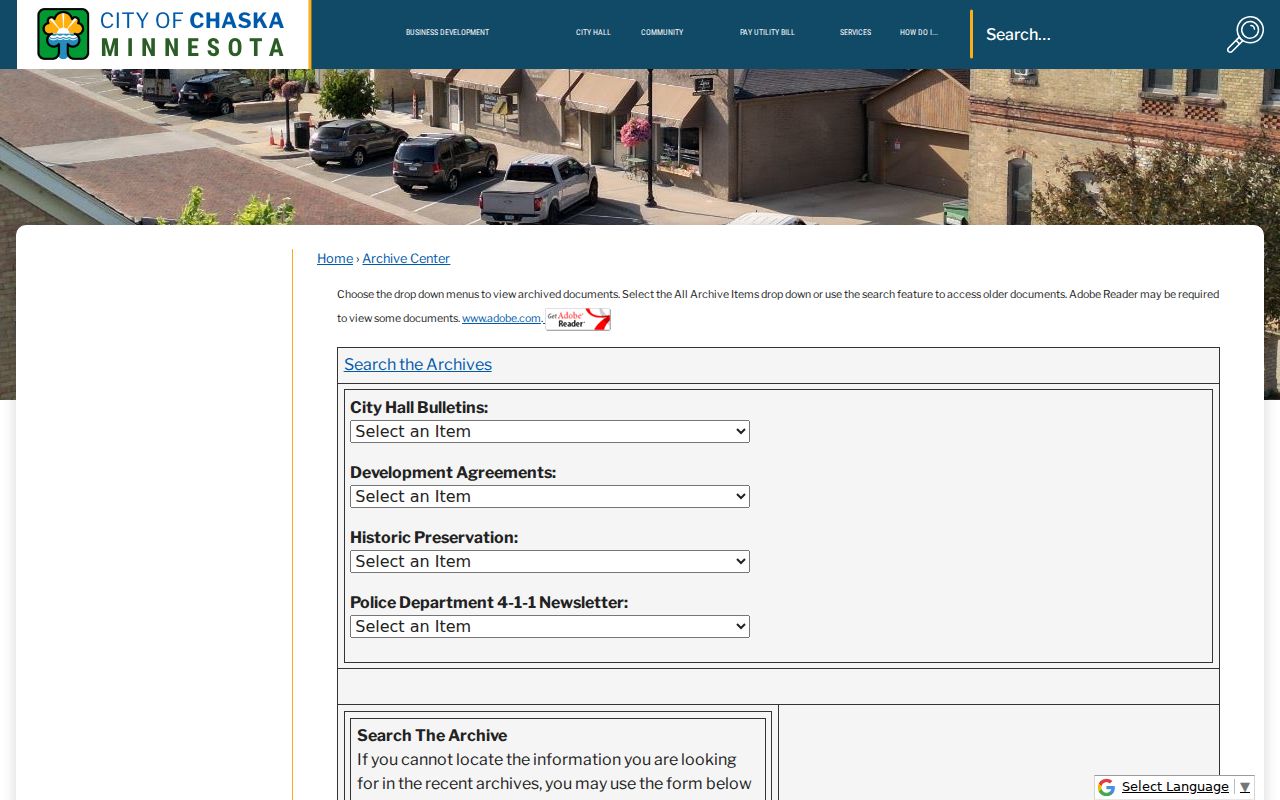
The archive’s separate search fields help narrow a Chaska document by time or collection rather than treating a modern address as the only key. For newspaper, yearbook, house-history, and cemetery questions, the Chaska History Center and county historical collections offer the better local Chaska trail.
The Chaska History Center at 112 West 4th Street holds local Chaska family genealogies, Barris and Glatzel files, newspapers, yearbooks, maps, house histories, church histories, cemetery indexes, and flood scrapbooks. Historical Society volunteers assist researchers on Tuesday, Friday, and Saturday afternoons. In May 2026, the Chaska Center became a FamilySearch Affiliate Library, allowing onsite access to some restricted FamilySearch images. Those collections can place a Chaska block in time, but they should not be used to infer a protected current address.
Chaska Neighbor Privacy Limits
Real Chaska addresses for Safe at Home participants are private under Minn. Stat. ch. 5B. Utility and delivery customer information, driver-record addresses, confidential court or vital material, nonpublic offender information, and private association membership lists are not general Chaska block-search sources. A person can be absent from a Chaska parcel record because they do not own the property, are protected, are unlisted, or have no connection to the record set being searched. Absence is not a conclusion about where someone lives.
Neighborhood Watch and Night to Unite offer a better civic path for connecting with nearby people. The Chaska Police Department programs page describes those community options.
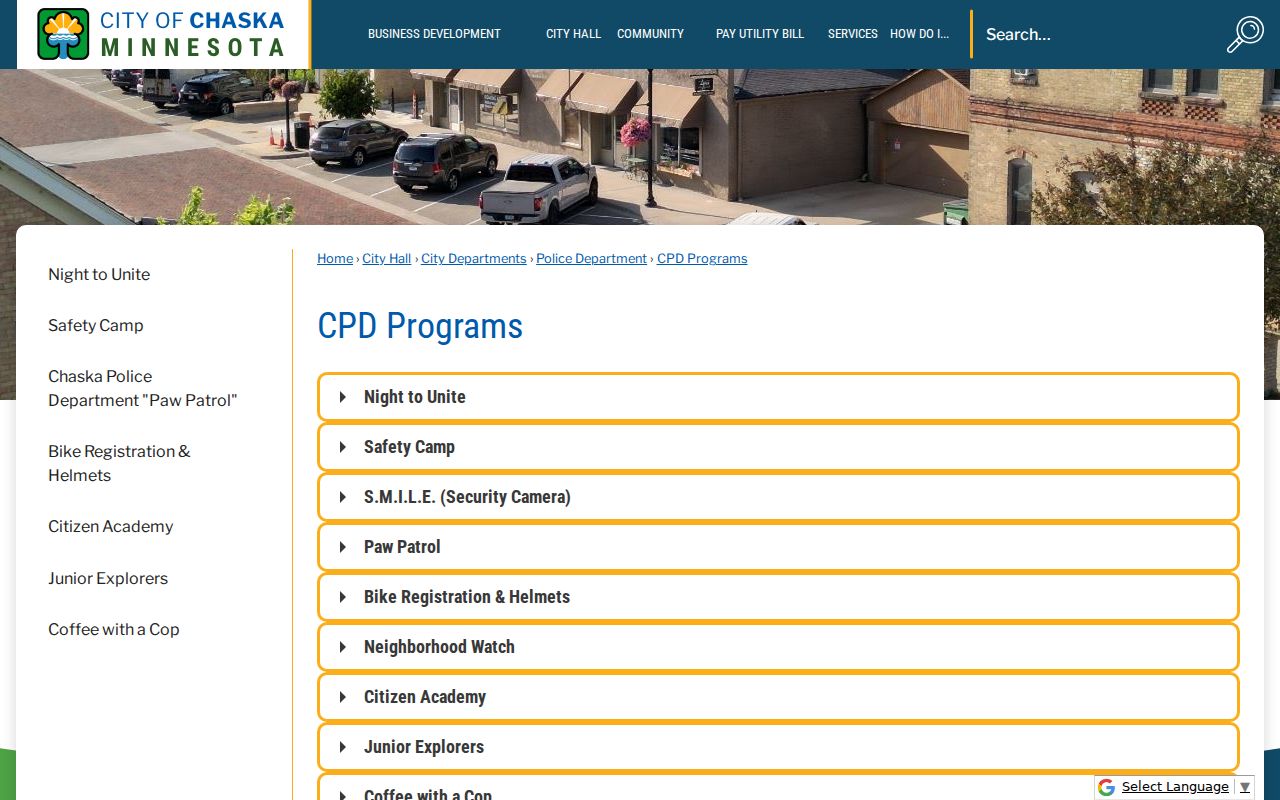
These programs facilitate voluntary contact and local safety awareness. They do not authorize monitoring, publication of personal details, or use of restricted voter information. When an official record seems wrong, send the document number, PID, or case number to the responsible custodian instead of trying to correct it through a block search.
Chaska Police records are also a separate request path. The city says most police-report requests can usually be processed within 14 days, but state and federal law can require redaction or withholding. A police report is not a court file, and neither record establishes the present occupants of a parcel. Keeping those custodian lines separate is one of the simplest safeguards when researching a nearby address.
Lawful use. Use Chaska neighbor information for personal block awareness, civic connection, family history, or an official record question. Do not use it to watch, stalk, harass, monitor, or intimidate anyone.