
Finding Chaska Residents From Records
A Chaska residents directory search works best when the first record matches the detail in hand. A Chaska address belongs in the Carver County property workflow. A Chaska court case number belongs in Minnesota Court Records Online. An old household name can be followed through Chaska phonebooks, Chaska newspapers, and Chaska local-history files. Each source records a different Chaska relationship, so the useful result is a dated lead rather than a claim that a person currently lives at a Chaska address.
For a present Chaska property connection, record the Chaska situs address, parcel identification number, owner name, and mailing address separately. For an older Chaska name, retain the spelling, year, and source page. Those details make it possible to compare later Chaska deeds, Chaska court files, or Chaska historical notices without combining people who merely share a surname.
- Start with the county property-information tool when a Chaska address or Chaska owner connection is known, and save the PID and Chaska situs address.
- Use the state registration form only to check a Chaska voter’s own status, not as an open name directory.
- Search the Chaska recorder’s party index for a recorded Chaska transfer or document tied to the parcel.
- For an earlier Chaska household, consult the verified Chaska phonebook, Chaska newspaper, and genealogy collections held locally.
- When the needed Chaska government record is not online, send a focused written request to the responsible custodian under Chapter 13.
Note: A no-result can reflect an unlisted, protected, older, or differently spelled record, rather than proof a person never lived in Chaska.
Chaska Resident Records Counters
Chaska is the Carver County seat, so several key Chaska records counters sit in the city but keep distinct records. Land Records & Vitals holds recorded Chaska property documents and local certificate services. Assessment staff maintain current Chaska property information. Elections & Licensing handles Chaska voter-list questions, while Chaska Court Administration keeps court files at the Justice Center. The Chaska counter that owns the record is the right fallback when a portal does not show enough detail.
Carver County Land Records & Vitals
600 East 4th Street
Chaska, MN 55318
Land Records: 952-361-1930
Carver County Assessment
Government Center
Chaska, MN 55318
952-361-1960
Carver County Elections & Licensing
600 East 4th Street
Chaska, MN 55318
952-361-1941
The Chaska recorder makes recorded documents available for research, but does not perform an abstract or lien search for the public. Chaska court staff can work most efficiently from a case number. The Chaska city data-request route is appropriate for city-held records such as older permits or public portions of reports, subject to the record’s classification.
Chaska Property Records by Parcel
Carver County Property Information is the primary current-property lead for a Chaska residents directory search. The Chaska workflow links a selected property to its report card, available plat, LandShark records, and tax summary. It can connect a Chaska address to a PID, but it should not be read as a Chaska household list. The property’s situs is where the Chaska parcel sits; a tax mailing address is only where notices are sent.
| Property tool | How it is used | Important limit |
|---|---|---|
| Property Report Card | Opens a summary for the selected property. | Fields vary in the live app. |
| Available Plat | Connects a parcel to a plat when one is available. | A plat does not replace a deed. |
| Land Records | Routes to the recorder’s LandShark system. | It is a separate party and document search. |
| Tax Summary | Shows current tax detail for the property. | Tax descriptions may be partial. |
| Map browse | Lets a researcher select a parcel and follow property links. | Current layer controls were not published in static inspection. |
A Chaska parcel is the county’s mapped piece of land. Its Chaska PID is the county identifier. Capture both before comparing a Chaska deed, a Chaska plat, or a Chaska permit record, especially where an old legal description is shorter than the modern Chaska address.
Chaska Resident Registration Checks
MNVotes is a self-verification form, not a public Chaska residents directory. It asks for first and last name, full date of birth, and the full Chaska address, then uses either ZIP-code or county mode before Chaska city or township, house number, street, and unit details. The state says the form updates nightly and can return next-step information for a Chaska voter when there is no match.
The public voter-information list is more limited than a web lookup suggests. Minnesota Statutes section 201.091 restricts who may obtain it, requires certified permitted use, and bars internet republication. A registered Minnesota voter may request a Chaska street-sorted walking list for the allowed election, political, or law-enforcement purposes, but it is not material to post or redistribute as a Chaska directory.
See the official MNVotes registration form before using the self-check route.
The visible controls show why a name alone is not enough for a registration check. A unit mismatch or an address that does not resolve should be referred to Carver County Elections instead of guessed from another record.
Note: Safe at Home participants use a separate confidential process, and normal lookup details should never be used to infer a protected residential address.
Chaska Deed Records in LandShark
The Chaska recorder’s LandShark portal provides the online Chaska land-record lead and reaches back to 1988. Its visible controls include business or last name, first name, middle initial, grantor or grantee role, document type, instrument group, and date range. A grantee is the party receiving an interest in a document; a grantor is the party transferring it. Those roles make a Chaska deed trail more reliable than a surname-only search.
Search the known Chaska owner as a grantee or in both-party mode, then compare the Chaska document number, recording date, and legal description to the PID. The seller named in a confirmed Chaska deed can become the next backward search. Image availability and payment prompts are separate from the index result, and dynamic document-type choices should be read in the portal rather than assumed.
Note: County staff provide recorded documents for research but do not supply title advice or perform the abstracting work for a chain of title.
Chaska Court Records for Name Leads
Minnesota Court Records Online, commonly called MCRO, can supply a separate public record lead for a Chaska name. The name mode supports last, first, and middle name, optional date of birth and date filed, case category, status, and a Carver County location choice. A trailing wildcard is allowed after two characters, while Sounds Like is a separate option and cannot be combined with that wildcard.
A public Chaska result may show the case number, parties, filing date, category, activity, hearings, and disposition. It does not establish a current Chaska address. Sealed, juvenile, expunged, confidential, and other restricted records are not available remotely. For fuller electronic access or a copy request, use the Carver County courthouse terminal or Chaska Court Administration and give the case number where possible.
The MCRO name-search interface displays the filters used to narrow a public case lead.
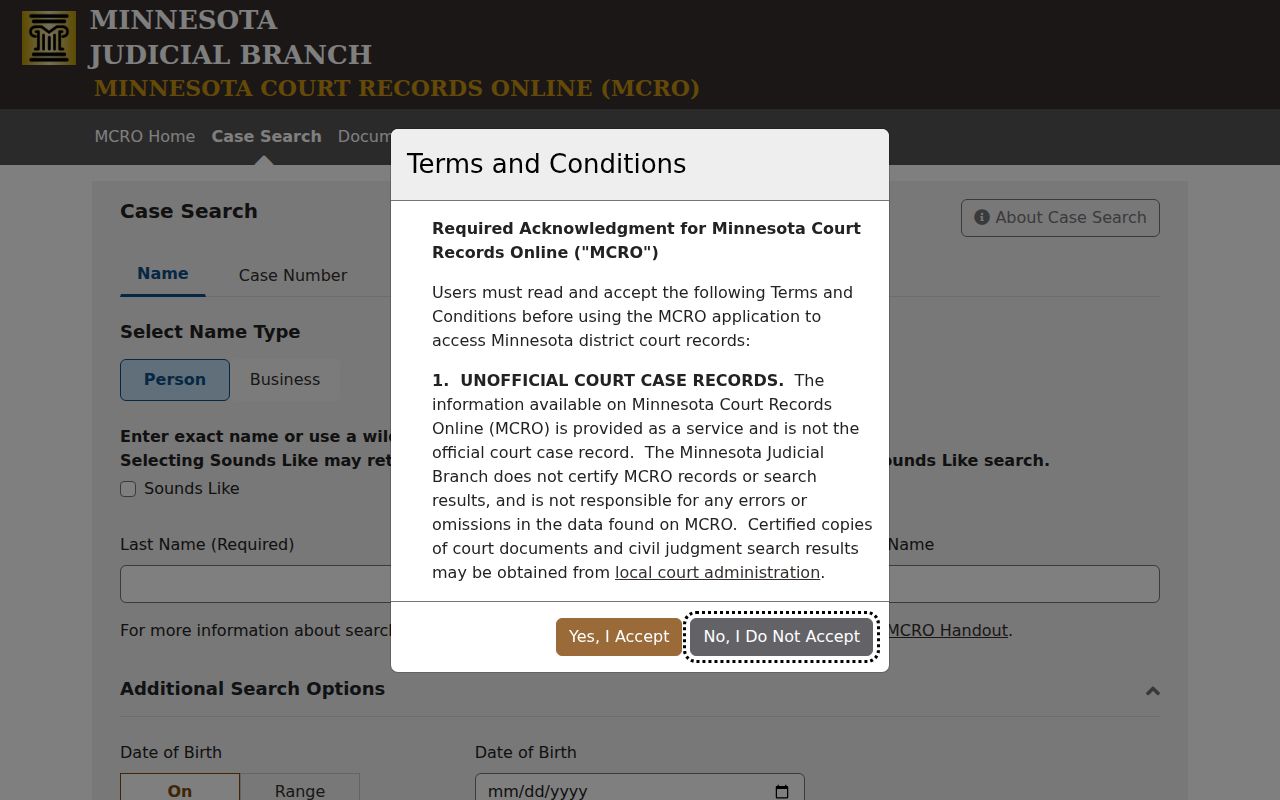
Checking the party role, county, filing date, and disposition protects against mistaking a same-name result for the person being researched.
Current Chaska Resident Directory Sources
No single current list identifies everyone in Chaska. The useful Chaska sources are role-based: a Chaska property roll identifies the assessed owner, a Chaska recorded-document index identifies parties to transactions, and the Chaska city employee directory identifies public staff. The official Chaska voter self-check confirms a registration only when the required personal and address details are entered. Chaska community associations are contact routes, not published household rosters.
| Current source | Relationship recorded | Custodian | Access route |
|---|---|---|---|
| Property Information | Chaska record owner, parcel, situs, and mailing details | Carver County Assessment | Free Chaska property app |
| LandShark | Chaska grantors, grantees, and recorded instruments | Land Records & Vitals | Online index from 1988; Chaska older counter |
| MNVotes | A Chaska voter’s own registration status | Minnesota Secretary of State | Full name, birth date, and Chaska address required |
| City staff directory | Public employees and department contacts | City of Chaska | Public staff route, not a resident list |
| Permit and archive records | Address-linked public municipal activity | City of Chaska | Online subset or focused data request |
When the question becomes whether several Chaska records concern one named person, compare independent attributes such as a middle name and Chaska address, a Chaska deed and PID, or a Chaska case number and date. That narrower task belongs in the Chaska resident lookup process rather than in a broad directory search.
Chaska Chapter 13 Record Requests
The Minnesota Government Data Practices Act, Minnesota Statutes chapter 13, starts with a presumption that government data are public unless another law classifies them otherwise. Under section 13.03, inspection is free. A responsible authority may charge actual costs for copies, and up to 100 black-and-white letter or legal pages are capped at 25 cents per page. Electronic copies should be provided when reasonably possible.
A useful written request identifies the office, record type, Chaska or Carver County connection, relevant dates, and a name, address, PID, or case number. The authority must respond immediately if possible, or within ten days excluding weekends and legal holidays. Ask to inspect before ordering copies when the needed portions are uncertain.
Personal, lawful research. Use Chaska records for legitimate personal, family-history, civic, or property questions. Do not use record leads to stalk, harass, monitor, or intimidate anyone.
Chaska Vital and People Records
For a birth, death, marriage, or adoption question, identify the event before ordering a certificate. Minnesota Department of Health Vital Records is the statewide custodian. Carver County can issue many routine county services, including deaths for Carver events back to 1870 and any Minnesota death from 1997 forward. Minnesota Historical Society indexes provide an earlier discovery route, but an index is not a certified record.
All Minnesota death records are public for noncertified informational copies, while certified copies have eligibility rules. Birth records are more restricted. A Minnesota-born adoptee age 18 or older has the state-only original-record process under section 144.2252; the county cannot fulfill that request. MOMS is the statewide marriage search, while a divorce decree is a court-file record.
The state vital-records office explains the county and statewide service split.
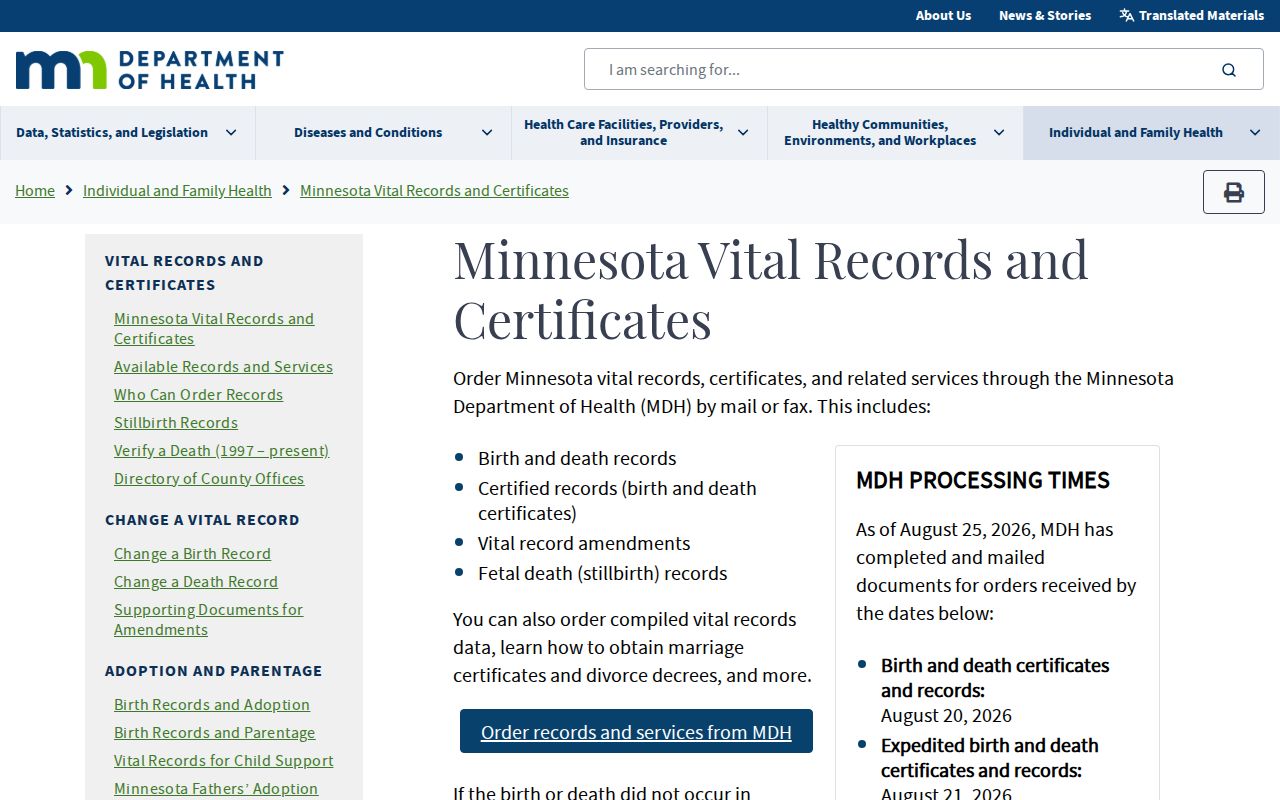
Use the historical or informational index first when it can answer the discovery question, then follow the custodian’s eligibility and identification requirements for a certificate.
Minnesota People Records Search is an additional historical lead for births, deaths, census, and related person records.
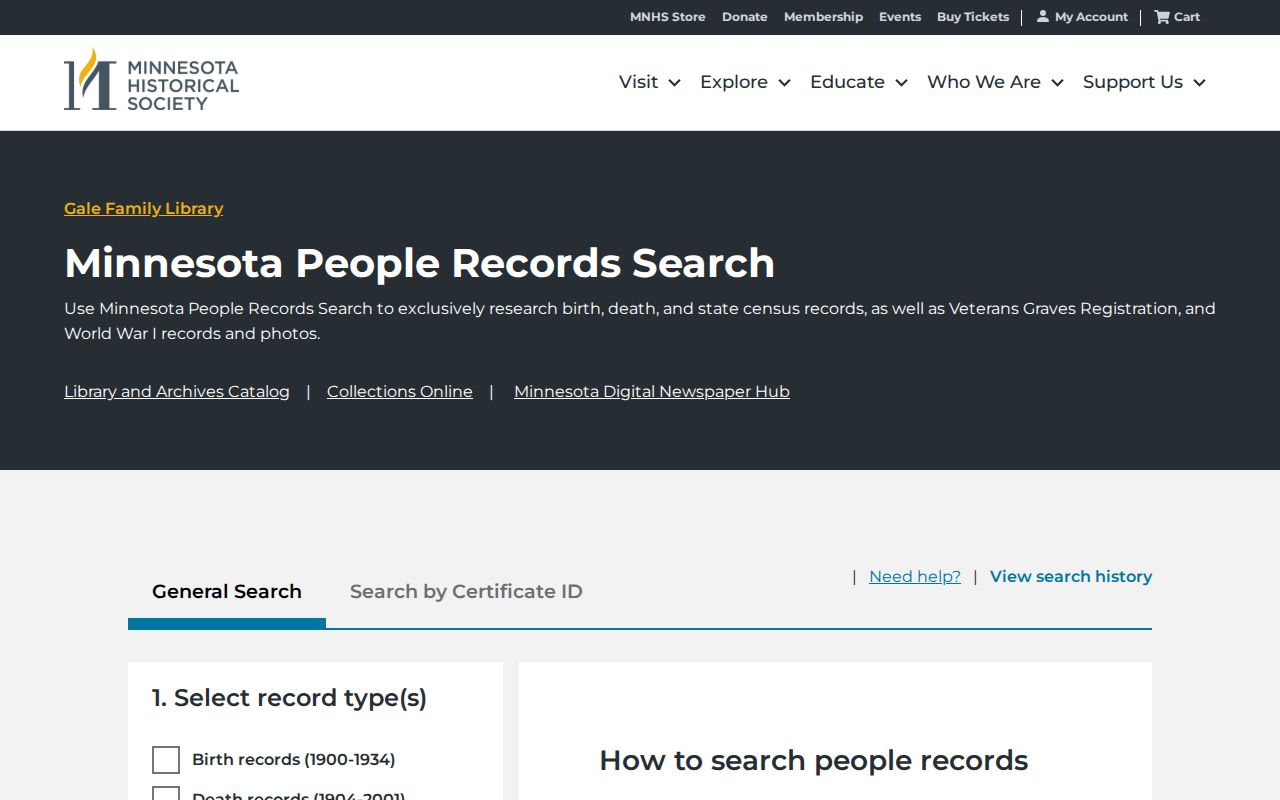
The search screen can point to a historical record, while the original custodian determines whether an image, copy, or certified document is available.
Chaska Historical Resident Sources
The Chaska History Center is the local bridge when a person predates an online record or appears only in community materials. Its holdings include family genealogies, the Barris clipping collection, Glatzel obituary papers, yearbooks, phonebooks, cemetery indexes, house histories, maps, and original newspapers. Proficio, its local photos and documents database, is available on site with volunteer help rather than as a public remote search.
The Center is at 112 West 4th Street and reports Tuesday, Friday, and Saturday hours from 1:00 to 4:00 p.m. The neighboring library and History Center serve different roles, so call ahead for current access and collection gaps. In 2026 the Center became a FamilySearch Affiliate Library, opening some restricted census, immigration, and church images to on-site visitors.
Note: A newspaper index result gives a date and page lead; the original page, not the search snippet, is the item that should be read and cited.
Historical Chaska Resident Directories
Chaska’s verified telephone-directory runs begin with 1909 and 1911, then include selected years through 2024. The Carver County Historical Society inventory lists 1945, selected 1949 through 1996 runs, 2002-2003, 2007-2015, 2018, 2020-2022, and 2024 among the available Chaska phonebooks. They can preserve a listed subscriber and address, but an omission does not establish that a home was vacant or that a person had left town.
The local historical shelf also includes a 1950s Carver County directory, a 1959 buyers guide, school yearbooks, the Herald index reaching to 1862, and paper copies of the unindexed Carver County Sun. Consult the history collections for the full run details before treating every phonebook as a conventional city directory.
- Roll
- A list kept for a specific public purpose, such as assessment or registration, not a complete population list.
- Index
- A finding tool that points to a record, often without reproducing the full document or image.
- Parcel
- A mapped unit of land identified by a PID and connected to tax, plat, and deed records.
- Criss-cross directory
- An address-organized directory format; a Chaska title and year run have not been verified, so ask the Center whether a listed phonebook has a street section.
Chaska’s 1988 Land Record Boundary
LandShark’s 1988 online start is a practical dividing line in a Chaska residents directory search. It does not mean earlier property history is missing. Recorded documents remain available for in-person research at Land Records & Vitals, and older address work can also move through plats, Sanborn maps, phonebook years, Herald pages, census microfilm, and obituary or cemetery files.
For a pre-1988 document, bring the current PID, legal description, document number if known, and approximate deed date to the counter. The recorder can make records available, but a title researcher or abstractor is the appropriate professional for a formal chain-of-title search. Keep a dated research log as each source is checked.
Chaska Record Roles Compared
Official records can be free to inspect online or at a counter, yet they do not all answer the same question. A current parcel app describes assessment data. LandShark records a land transaction. MCRO records public court activity. MNVotes lets an individual check registration. Combining a role and a date is more dependable than treating any single source as a complete profile.
| Official record lead | Compiled commercial report |
|---|---|
| Has a named custodian, stated scope, and a route to the original record. | May combine records from different dates and sources. |
| Can be checked against a PID, case number, certificate rule, or original page. | May retain stale addresses, duplicates, or same-name matches. |
| Still has public-record, confidentiality, and lawful-use limits. | Does not remove those limits or replace verification with the official custodian. |
Use an official source to verify a meaningful Chaska record lead. If a government record appears inaccurate, contact the custodian with the PID, document number, case number, or other record identifier rather than trying to alter the entry yourself.
Chaska Resident Privacy Boundaries
Public access has clear edges. Safe at Home participants use a designated Saint Paul mailing address while their actual residential address remains private. Driver and identification-record addresses are restricted under Minnesota and federal law. Court, vital, and municipal data can also be confidential, sealed, expunged, or otherwise classified. A portal’s convenience does not change the underlying privacy rule.
Property ownership, a tax mailing address, a homestead indication, a permit applicant, a ZIP code, and an historic phone listing describe different facts. None establishes a present household by itself. Preserve the source date and use only the smallest amount of personal information needed for a legitimate question.
Note: Minnesota’s address-confidentiality and voter-withholding rules protect safety-sensitive records even when related records are otherwise public.
Chaska County-Seat Record Story
Carver County was organized in 1855 and voters moved the county seat to Chaska in 1856. That history explains the unusually close set of custodians downtown: the History Center preserves community material, the Government Center keeps county land and vital functions, and the Justice Center handles court files. Each office has its own access and privacy rules, even when a name or address crosses more than one record system.
Older Chaska streets can appear in an 1880 property-owner map, Sanborn pages, a paper deed book, a phonebook, and a current parcel map. The change in format is useful evidence of time, not a reason to force every old reference into a modern address. Match the record to the period it describes.